
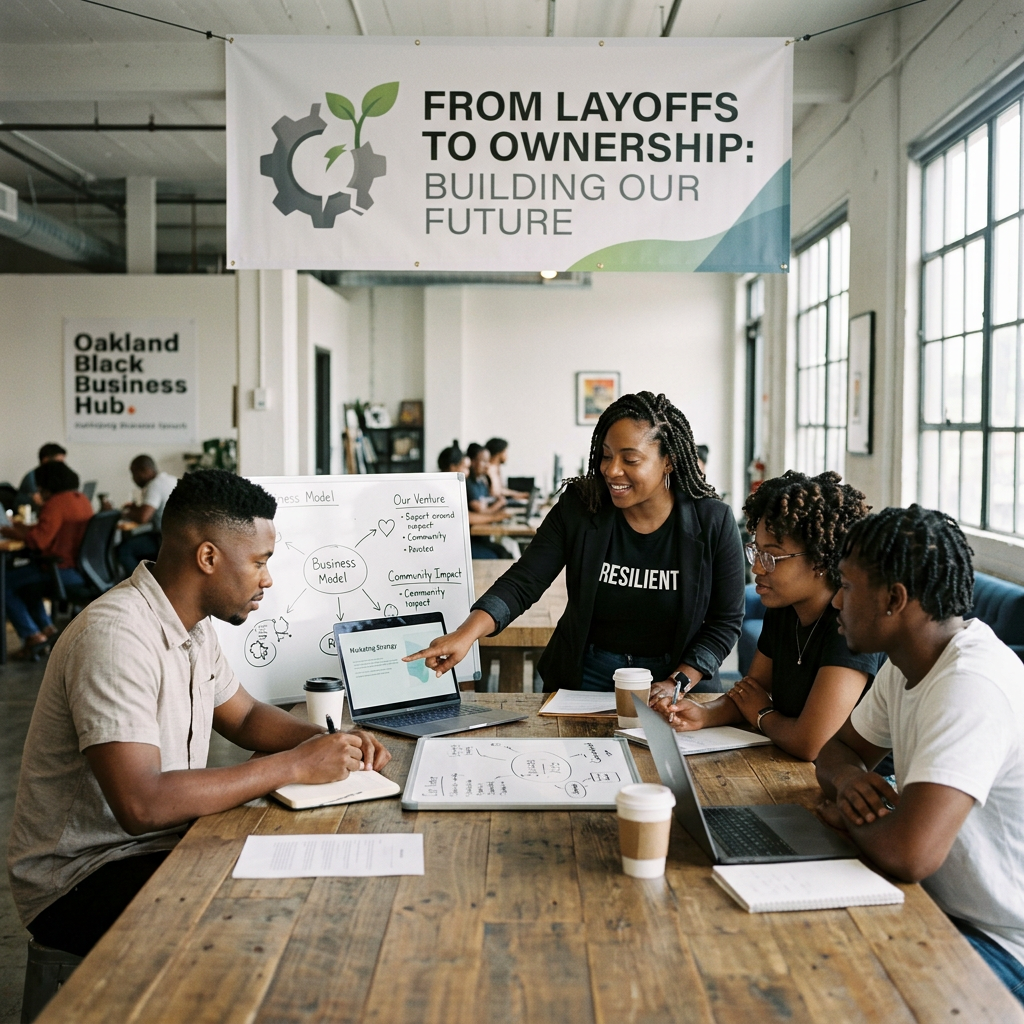
Introduction: When Job Loss Meets Financial Exclusion
The Trump administration’s second term brought a wave of economic instability that disproportionately affected Black workers. As federal workforce reductions, DEI rollbacks, and corporate hiring freezes took hold, thousands of Black Americans found themselves suddenly unemployed. But job loss was only the first hurdle. For many, the next challenge was even more daunting: accessing capital to rebuild their livelihoods through entrepreneurship.
Despite systemic barriers, Black entrepreneurs launched businesses at a remarkable rate during this period. They did so by forging new financial pathways, leveraging community‑based funding, and innovating around traditional lending systems that have historically excluded them. This article explores how Black entrepreneurs navigated capital scarcity, built alternative funding ecosystems, and transformed economic adversity into opportunity.
The Capital Gap: A Long‑Standing Barrier Made Worse
Historical Inequities in Lending
Black entrepreneurs have long faced structural barriers in accessing business capital. According to the Federal Reserve’s Small Business Credit Survey (https://www.fedsmallbusiness.org), Black‑owned firms are:
- More likely to be denied loans
- Less likely to receive full funding
- More likely to rely on personal savings
- More likely to be discouraged from applying due to anticipated rejection
These disparities existed long before the Trump administration, but policy shifts during this period intensified them.
Policy Rollbacks That Reduced Access
Several federal actions contributed to a worsening capital landscape:
- Cuts to the Small Business Administration’s community lending programs
- Reduced federal contracting goals for disadvantaged businesses
- Elimination of DEI‑focused grant initiatives
- Weakened enforcement of anti‑discrimination protections in lending
The Brookings Institution (https://www.brookings.edu) reported that Black‑owned businesses lost billions in potential federal contracting revenue due to lowered procurement targets.
Rising Unemployment and Shrinking Savings
With Black unemployment rising to 7.5% by late 2025 (Economic Policy Institute), many displaced workers lacked the savings needed to self‑fund new ventures. This created a dual crisis: job loss and capital scarcity.
How Black Entrepreneurs Built New Funding Pathways
Despite these barriers, Black entrepreneurship surged. The reason? Innovation, community support, and alternative financial ecosystems.
1. Community‑Based Lending Networks
Black entrepreneurs increasingly turned to community‑driven financial models, including:
- Rotating savings clubs (susus)
- Church‑based investment groups
- Neighborhood lending circles
- Black‑led community development financial institutions (CDFIs)
CDFIs such as Hope Credit Union and LiftFund saw significant increases in Black business applicants during 2025–2026. These institutions often provided:
- Lower interest rates
- Flexible underwriting
- Credit‑building opportunities
- Financial education
2. Crowdfunding as a Capital Equalizer
Platforms like:
- GoFundMe
- Kickstarter
- Indiegogo
- FundBlackFounders
became essential tools for Black entrepreneurs who lacked access to traditional loans.
Crowdfunding allowed displaced workers to:
- Raise startup capital quickly
- Validate business ideas
- Build early customer bases
- Share personal stories that resonated with donors
The Pew Research Center (https://www.pewresearch.org) found that crowdfunding participation among Black Americans increased significantly during periods of economic instability.
3. Cooperative Business Models
Co‑ops emerged as a powerful strategy for capital‑constrained entrepreneurs. These models allowed multiple founders to:
- Share startup costs
- Pool resources
- Divide labor
- Reduce financial risk
Examples included:
- Shared commercial kitchens
- Cooperative retail spaces
- Joint marketing collectives
- Multi‑owner service businesses
4. Digital Entrepreneurship With Minimal Upfront Costs
Online businesses require far less capital than brick‑and‑mortar ventures. Black entrepreneurs leveraged:
- Shopify
- Etsy
- Instagram Shops
- TikTok storefronts
- YouTube monetization
Shopify’s research division (https://www.shopify.com/research) reported a notable rise in Black‑owned online stores during 2025–2026, driven by job displacement and digital accessibility.
Case Studies: Black Entrepreneurs Who Built Businesses Without Traditional Capital
Case Study 1: The Crowdfunded Beauty Brand
After losing her job at a retail chain, Keisha M. launched a natural hair‑care line. With no access to traditional loans, she turned to crowdfunding. Her GoFundMe campaign raised $18,000 in two weeks — enough to purchase supplies, build a website, and secure a small manufacturing partner.
Today, her products are sold in three regional beauty supply stores and online nationwide.
Case Study 2: The Cooperative Food Business
In Detroit, a group of laid‑off restaurant workers formed a cooperative soul‑food catering company. Each member contributed a small amount of capital, and the group secured a shared commercial kitchen through a local nonprofit.
Their business now caters corporate events, church gatherings, and community festivals — providing income for all members.
Case Study 3: The Digital Consultant
Andre T., a former federal project manager, launched a virtual consulting business after losing his job. With only a laptop and internet access, he built a client base of nonprofits needing digital transformation support.
Andre’s startup costs were under $500, and he now earns more than he did in his federal role.
The Role of Black‑Led Financial Institutions
Black‑led banks and CDFIs played a critical role in supporting entrepreneurs during this period. Institutions such as:
- OneUnited Bank
- Carver Federal Savings Bank
- Industrial Bank
expanded loan programs, offered financial literacy workshops, and partnered with community organizations to support displaced workers.
The FDIC Minority Depository Institutions Report (https://www.fdic.gov) highlights the importance of these banks in underserved communities, noting that they often approve loans traditional banks reject.
The Rise of Venture Capital for Black Founders
Although venture capital remains overwhelmingly white and male, several Black‑led VC firms gained prominence during this period, including:
- Backstage Capital
- Harlem Capital
- Fearless Fund
These firms focused on:
- Women founders
- Black founders
- Underrepresented entrepreneurs
While VC funding is still limited, these firms provided critical support for tech‑driven Black startups.
Long‑Term Implications: A New Financial Ecosystem
The capital strategies developed during this period have long‑term implications for Black entrepreneurship:
1. Increased Financial Literacy
Entrepreneurs gained skills in:
- Budgeting
- Credit management
- Investment strategy
- Digital marketing
2. Stronger Community Wealth Networks
Community‑based funding models strengthened:
- Local economies
- Intergenerational wealth
- Cooperative ownership
3. Growth of Digital‑First Black Businesses
Online entrepreneurship continues to expand, offering scalable, low‑cost opportunities.
4. Rising Influence of Black‑Led Financial Institutions
Black‑led banks and CDFIs are becoming central pillars of economic empowerment.
Additional Sources for Further Reading
- Federal Reserve Small Business Credit Survey: https://www.fedsmallbusiness.org
- Brookings Institution – Black Wealth Research: https://www.brookings.edu
- SBA Office of Advocacy – Minority Business Reports: https://advocacy.sba.gov
- Pew Research Center – Digital Economy Studies: https://www.pewresearch.org
- FDIC Minority Depository Institutions Report: https://www.fdic.gov


Leave a Reply